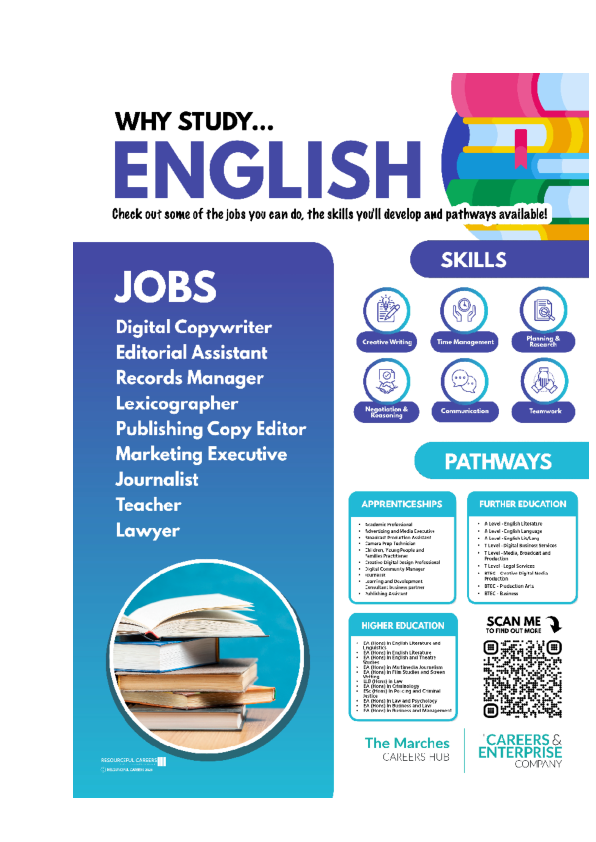
English
The study of English Language is the study of functional, articulate communication; the study of English literature is the study of how to communicate in a beautiful, memorable way: both are essential for success in today’s world. Whether it’s writing a job application, following current affairs, or arguing your opinion, the study of English literature and language is necessary. Not only does every job require at least a basic grasp of English, there are many exciting, creative careers stemming from the study of English, such as teaching, law, the civil service, working in social media, journalism, and publishing. Famous English literature graduates include Stephen Fry and Emma Watson.
Maths
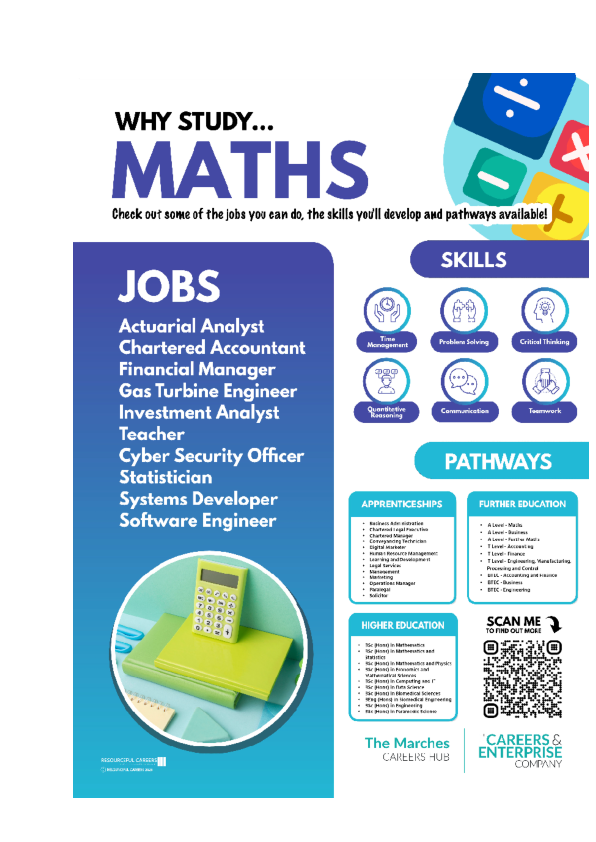
Maths helps students to develop a wide range of skills that are invaluable in the workplace. Students learn to become critical thinkers and problem solvers. They learn how to communicate their ideas; work within a team and independently; construct logical arguments and expose illogical arguments. Maths also helps to develop organised thought; time management as well as efficient numeracy skills. Studying Maths can lead to a huge number of career paths, including: accountancy; computing; engineering; medicine; teaching and working in the sciences. Studying Maths helps students to develop a wide range of skills that are invaluable in the workplace. Students learn to become critical thinkers and problem solvers. They learn how to communicate their ideas; work within a team and independently; construct logical arguments and expose illogical arguments. Maths also helps to develop organised thought; time management as well as efficient numeracy skills. Studying Maths can lead to a huge number of career paths, including: accountancy; computing; engineering; medicine; teaching and working in the sciences.
Science
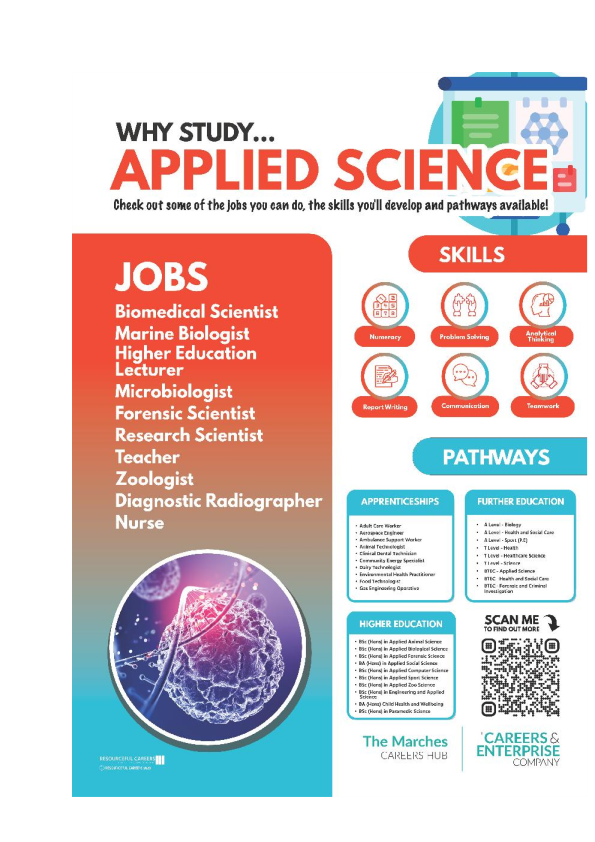
Science includes teaching the fundamental ideas in Biology, Chemistry and Physics. These subjects are heavily embedded in the world around us as well as in many different jobs. Some that you wouldn’t even think use science such as the chemistry of hair colouring in hairdressing, physics of
forces in the construction industry, physics of light and sound in performance arts and biology in caring professions. For others who would like to pursue a career path focussed on science, our combined science and triple sciences courses offer the knowledge and skills students will need to
further their education at College studying for A-levels and beyond at University. Developing student’s scientific skills is also an important aspect of our curriculum. Students learn to use a wide range of scientific equipment safely and precisely. They use mathematical skills in analysing data and
evaluate the validity of what they have done – both skills that again, will be used in many jobs and everyday life, not just in a science lab.
The science department get students involved in a range of career inspiring activities both inside school and off site including:
- LifeLab (based at Southampton General Hospital)
- Operating Theatre Live
- BAE Systems STEM based Roadshow
- Aurora Zoo in conjunction with Southampton University Astrophysics Department
- Women in Science Conference
Design Technology (DT)
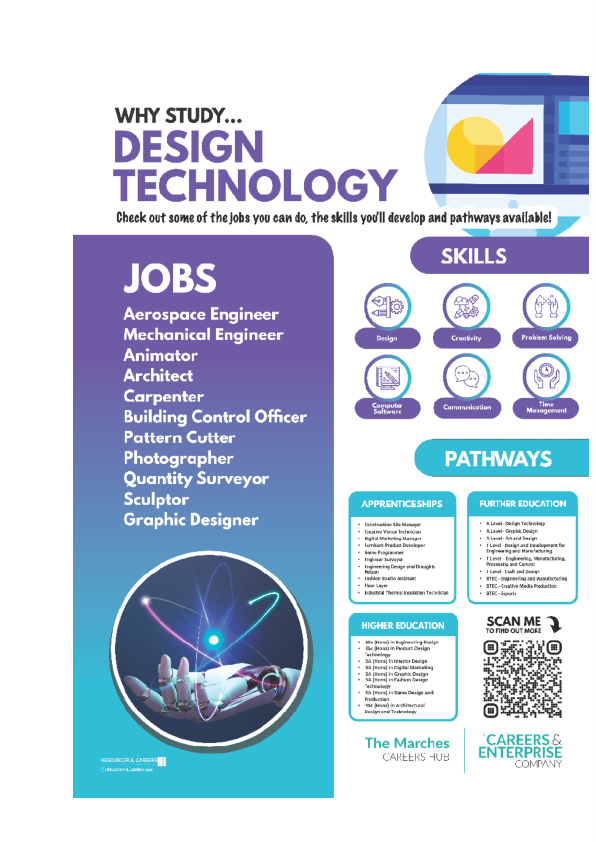
Design Technology opens up career opportunities in many sectors, and provides not only life skills but prepares pupils for a range of career options.
Food not only is a life skill but can provide careers in the Catering and hospitality industry. Roughly 13% of people work in jobs related to Food.
Engineering and construction are the driving force in the countries economy providing jobs ranging from plumbers to Aerospace Engineering and representing 19% of employment in the country.
Textiles is not only a life skill but provides job opportunities in a range of careers including manufacturing, fashion and retail. Currently around 3% of people work in textile related industries.
Dance
Drama
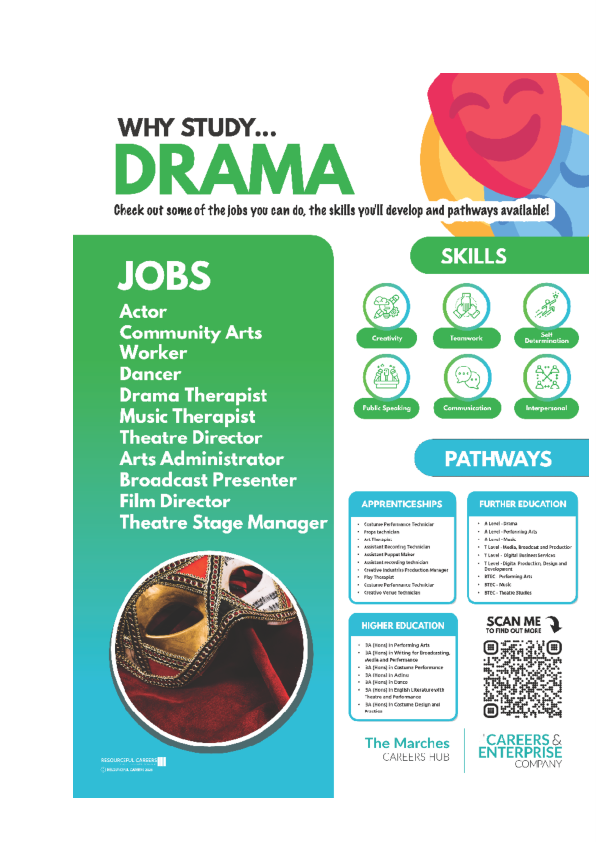
Drama helps to build a range of skills including confidence, communication and collaboration. These skills can be used and transferred within a wide range of careers and in student’s everyday lives. Studying drama can lead students onto a variety of training and career opportunities. Training can range from apprenticeships for example; as a theatre technician, recording engineer or exercise instructor, to A Level, BTEC and degree courses in the Performing Arts and beyond.
Skills developed within drama can include; teamwork, technical ability, time management, organisation, communication, creativity, attention to detail and discipline.
Careers in the performing arts could include; actor, choreographer, broadcaster, arts administration, cinematographer, disc jockey, musician, set designer, director, producer, stage manager, school teacher, dancer and many more.
Geography
Studying Geography equips students with the understanding and focus in resolving issues about the environment and sustainability. As well as making connections between the human and physical world around us. Geography is a subject that is recognised for teaching students knowledge and skills such as knowing how the world works, communication, planning research, working in a team, and report writing.
Additionally you will find geographers working in a wide range of jobs such as town planning, government policy makers, travel and tourism, environmental scientists and working for international charities.

History
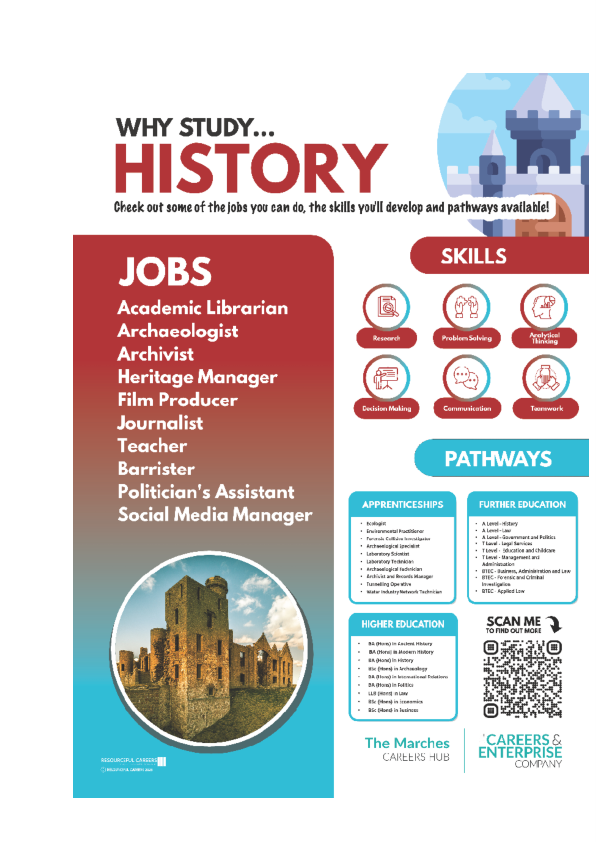
History will help to develop their written and oral communication skills, which are vital in the workplace. Students are also required to put forward logical arguments when studying the past, demonstrating that they can consider both sides of an argument to come to a conclusion. Additionally, students learn to comprehend and analyse sources and interpretations, a skill which many employers look for. These skills will not only help them in their careers but also in their daily lives as adults. Furthermore, there are numerous careers in which studying History is seen as beneficial to an employer including fields such as law, advertising, journalism and teaching.
Modern Foreign Language (MFL)
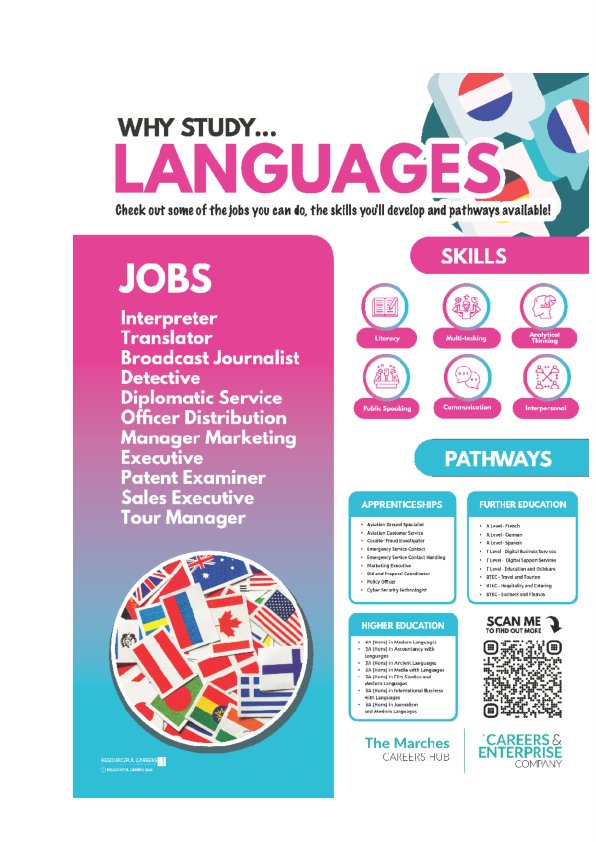
The study of a Modern Foreign Language, like French or Spanish, is the study of a new culture, a different way of life and the science behind languages and daily communication. Studying a language equips students with an increased cultural capital, a broader education about life outside of the United Kingdom and the potential to effectively communicate with millions of people around the world. In addition to this, it opens doors to studying, working and living abroad. A variety of careers will also be available to you, such as translation and interpreting, European studies, European politics and diplomatic services, a career in logistics or the media as well as teaching. The possibilities are endless. Showing that you have a deep understanding of a foreign language shows that you are a resilient learner with an appreciation of the world around you and you will join the ranks of celebrities such as Bradley Cooper, Natalie Portman and Bill Clinton! Did you know, we also have five bilingual teachers at Woodlands?
Music
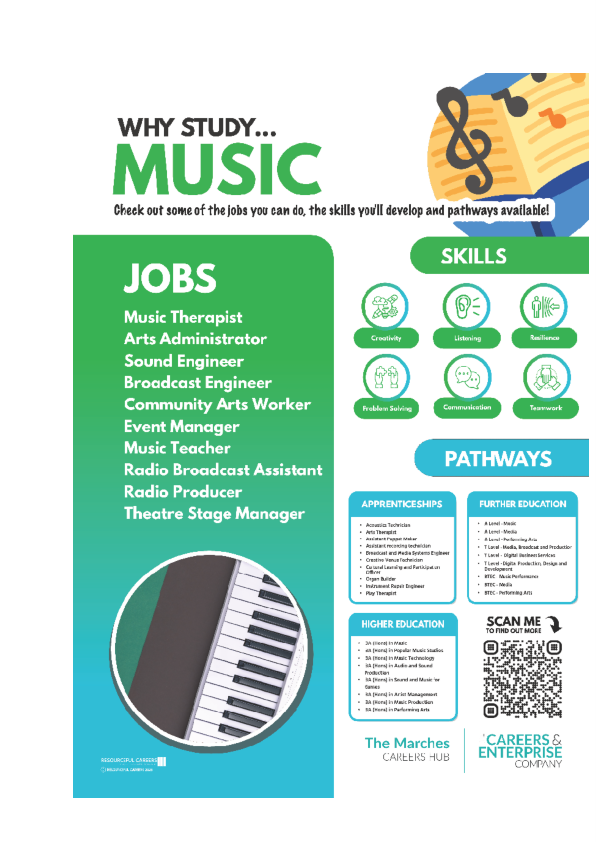
Studying Music opens up a myriad of opportunities to develop creative, critical and social skills. The sheer number of transferable skills enhanced by Music is incredible. The student of Music will also improve their cultural, political and historical outlook on the world.
Careers are hugely varied and include many surprising avenues to explore. The best known of these being: Teacher, performer, composer, DJ, radio presenter, sound engineer, sound technician, publisher, producer, band manager, promoter, studio manager, talent scout, arranger and many many more,
Students will learn how to produce high quality musical products, manage their time and resources and to perform and compose for a wide variety of scenarios. They will also learn to be creative under pressure which will equip them well for careers of the future.
Physical Education (PE)
Studying PE equips students with the a variety of fundamental skills to support future career path. Our inclusive PE curriculum creates opportunity to develop pupils’ teamwork and resilience and furthers mutual respect for peers. This allows greater success on essential levels. Alongside this, pupils positively demonstrate respectful attitudes to each other in all aspects of PE. Extensive participation in extra-curricular allows pupils to continue their development and application of reinforced laws. Pupils learn to be gracious in defeat against others and show commendable sportsmanship and respect both on and off the pitch, skills that can be adapted and applied to all aspects of life. Lesson by lesson resilience and self-esteem are established, alongside the development of new skills and the opportunity to trial new experiences. The greater mind set of our pupil’s allows them to succeed, showing perseverance and determination. Unit 5 for the BTEC course has coaching as an integral part of the unit where students will have the opportunity to develop and applying coaching skills required for the industry. Following further study, students could progress to employment in a related field, such as physiotherapy, leisure management, sports instructors/coaches, dieticians, nutritionists, and sports psychology.

Art
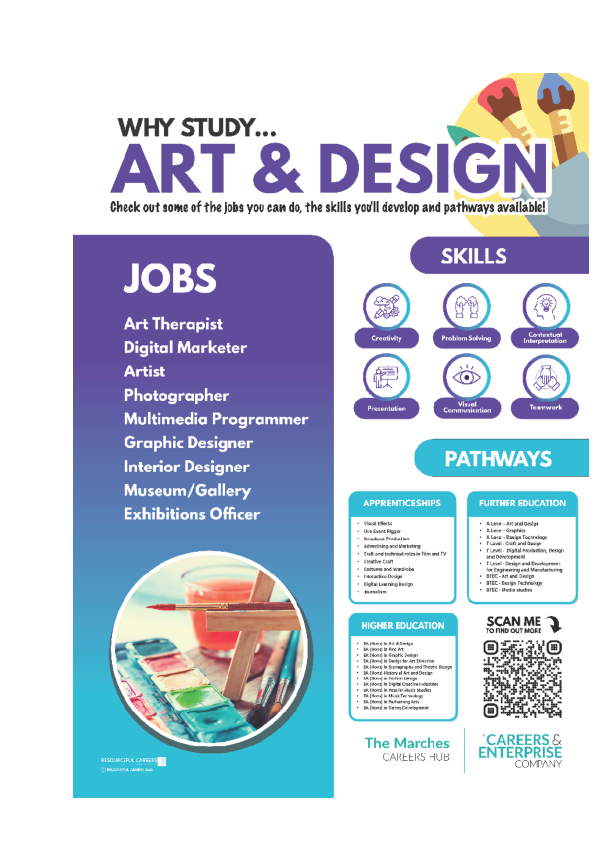
The course is suitable for anyone that enjoys art and being creative. It is essential that you have an open mind to trying many new techniques and media to provide a variety of work for your coursework folder and to find your chosen style. The course will give you the skills that you need if you would like to study art further at A’ level standard or BTEC level 3 followed by a degree in a wide range of creative course or an apprenticeship. There are many careers in the creative industry including: architect, graphic designer, jewellery designer/maker, glass designer, furniture designer/maker, ceramic designer/maker, product designer, interior designer, set designer, art teacher, stage make-up artist and many more.
Photography
This course is suitable for anyone that is curious about photography and would like to learn
the basic operational skills of a digital SLR camera, taking creative and imaginative photos
and using digital technology to manipulate images in photoshop. Alongside digital / IT based
elements of this course, it is essential that you have an open mind to trying many new
manual editing techniques such as monoprinting, drawing and other different media. This
will provide a variety of work for your digital coursework folder and to find your chosen
style. The course will give you the skills that you need if you would like to study
art/photography further at A’ level standard or BTEC level 3 followed by a degree in a wide
range of creative course or an apprenticeship. There are many careers in the creative
industry including: photographer in many different fields such as portrait, sports, food etc,
games designer, videographer, TV/film camera operator, teacher, lecturer, and many more.

Childcare
The course is designed to develop students’ knowledge and understanding of what it takes
to provide care for children. In this course students will learn about topics such as the
growth and development of young children, children's play and leisure activities, practical
health and safety, learning and development through play, confidence building, and science
and technology activities for young children. This could be the starting point for students to
pursue a career in childcare, whether that is with a nursery setting or perhaps in primary
education.

Sociology
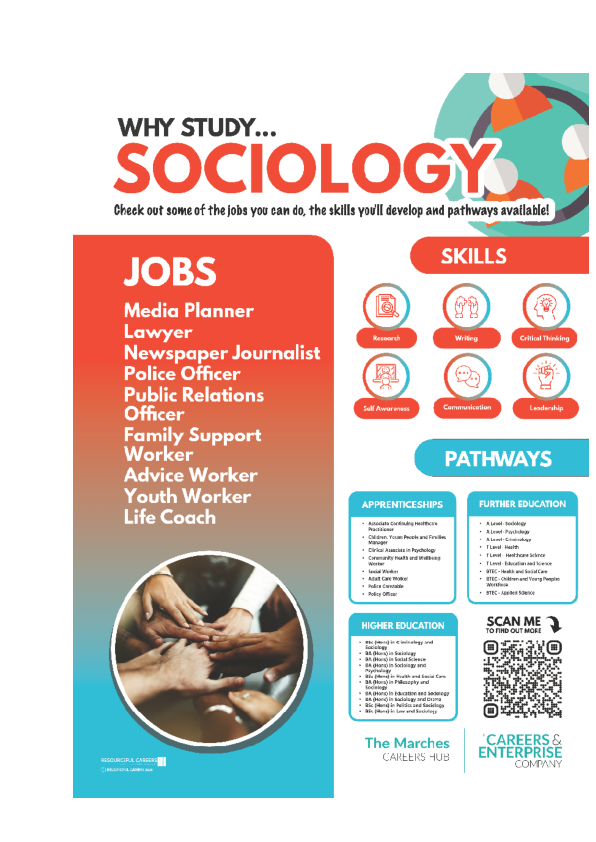
GCSE Sociology teaches students how society works and how people’s lives are shaped by
social structures, culture and institutions. It examines how people learn social norms and
values and how our identity is shaped by our family, peers, the media, religion and other
factors. Students who enjoy using their critical thinking skills to look at different viewpoints
on the same issue and are able to spot bias and stereotyping will really enjoy this subject. In
short: GCSE Sociology teaches you to think critically about society – why things are the way
they are, who benefits and how change happens. A knowledge of Sociology could enable
students to become a social worker, youth worker, police officer or even pursue a legal
route into criminology, the police force or a role within the criminal justice system.
Psychology
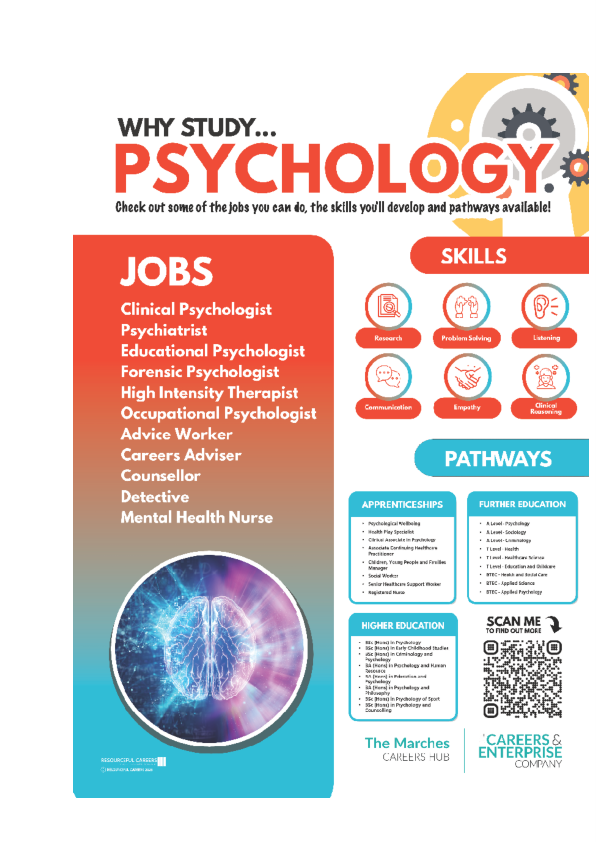
GCSE Psychology is about understanding how the mind works and why people behave the
way they do. It looks at human behaviour scientifically, using research evidence and
experiments. It looks are how memory works and why we forget, as well as looking at how
we change as we grow. Case studies are used to provoke discussions on areas such as
conformity and obedience as well as psychological problems (depression, addiction, mental
health issues). Students with an interest in Psychology could continue their journey along a
route to become a psychologist, a counsellor or work within sports psychology or as a
mental health nurse.
RE
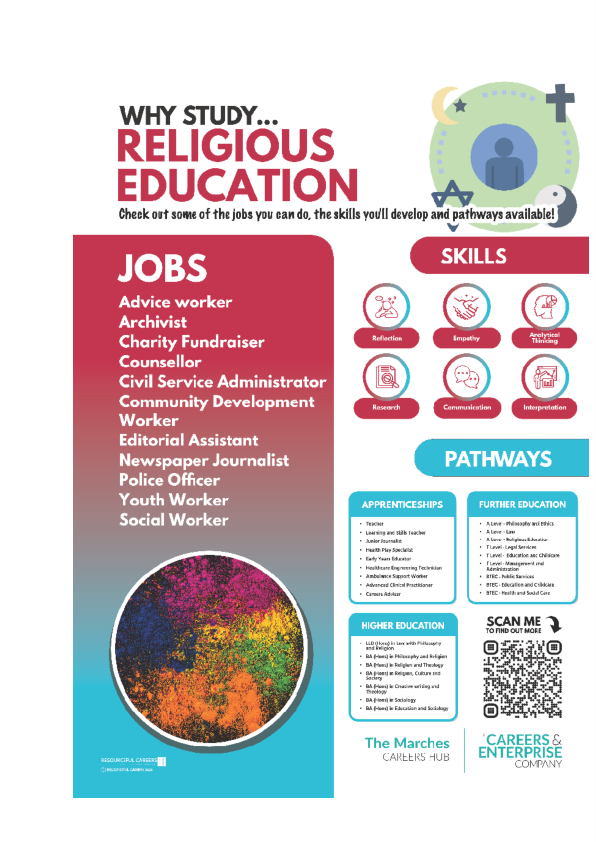
GCSE Religious Education (RE) is all about exploring different religions, beliefs, values and
moral issues. It is not just about learning what different religions teach, but also about
debating big life questions and dilemmas. A qualification is RE can lead to a number of
career areas including law and politics, charity and social work as well as journalism and the
Civil Service.